Wholesale Apparel Sourcing in 2026: A B2B Guide to Value, Inventory Control and Verified Performance

Wholesale apparel sourcing in 2026 is being shaped by three forces at once: value-seeking consumers, continuing trade and inventory uncertainty, and a stronger need to verify product claims before committing capital. For distributors, importers, retailers and online resellers, the opportunity is not simply to find the lowest unit price. It is to build an assortment that protects margin, turns predictably and gives the buyer enough evidence to sell with confidence.
SourceClothe supplies closeout, overstock and bulk apparel across hardshell jackets, work pants, activewear and swimwear. In this guide, we outline the sourcing questions that matter most in the current market and the information buyers should request before placing a wholesale order.
Three signals shaping wholesale apparel in 2026
1. Low growth and tariff uncertainty are raising the cost of a wrong buy
McKinsey and The Business of Fashion expect the global fashion industry to post low single-digit growth again in 2026. In the State of Fashion 2026, 46% of fashion executives surveyed said they expected industry conditions to worsen, compared with 39% a year earlier. Tariffs were cited as the number-one hurdle.
At the same time, sentiment toward China was improving even though conditions remained difficult. For wholesale buyers, this means supplier selection and total landed cost matter more than a headline factory price. A lower FOB quote can become a more expensive order after freight, duties, delays, returns or markdowns.
2. Value-seeking behaviour is becoming structural, not temporary
The 2026 Retail Industry Global Outlook from Deloitte reports that value-seeking consumers are a lasting force. Nearly seven in ten retail executives surveyed agreed that trading down, using value channels or swapping convenience for savings represents a structural shift, not a temporary reaction to inflation.
Deloitte also notes that as much as 40% of consumer perceptions of value can come from factors beyond price, including quality, service and trust. That is directly relevant to B2B buyers: a wholesale product must offer a defensible retail proposition, not just a low acquisition cost.
3. Performance claims need testable evidence
Categories such as waterproof outerwear are particularly exposed to vague claims. ISO 811:2018 specifies a hydrostatic pressure method for determining the resistance of fabrics to water penetration. The standard is current and was reviewed and confirmed in 2025, as shown on the official ISO 811:2018 page.
Buyers should not treat the word “waterproof” as a specification. Ask which test method was used, how the result is reported, how seams and closures are protected, and whether the performance claim applies to the fabric only or to the finished garment.
What value-seeking demand means for B2B buyers
Value-seeking consumers still buy, but they compare more carefully. For wholesalers and resellers, that changes the role of each product in the assortment:
- Entry-price stock can attract traffic and fill promotions, but it must meet the quality promise of the sales channel.
- Core basics need dependable size ratios, repeatable colour options and packaging that supports efficient listing and fulfilment.
- Closeout and overstock can deliver strong margin when condition, lot consistency and remaining stock are transparent.
- Performance products need documented construction and testing because a product claim is also a marketing and returns risk.
The best wholesale programmes are not simply cheap. They reduce the buyer’s uncertainty at every stage: what is in stock, what the mix looks like, how it will be packed, when it will ship and what happens if the delivery does not match the order.
Why closeout and overstock need tighter controls
Overstock apparel can be an excellent fit for value-driven demand, but only when the buyer understands that stock can arrive in limited colourways, size ratios or batch quantities. A professional supplier should separate three different questions:
- Is the product first-quality stock, a customer return, a cancelled order, or a mixed lot? These are not interchangeable.
- What is the exact available quantity, and what happens if the buyer wants a repeat order? A “large stock” claim is not an inventory report.
- How will the lot be packed and documented? Buyers need a packing list, size/colour breakdown and carton data that can be checked on arrival.
Where information is not yet confirmed, the right response is not an invented number. It is a quotation with clear assumptions. SourceClothe therefore keeps MOQ, tier pricing, packing, stock and lead time subject to written quotation rather than publishing unverified figures.
A practical supplier checklist for 2026
1. Ask for product-level evidence
Request a specification sheet, material composition, construction details, available size range, colour options and any relevant test reports. For waterproof garments, the test method and reported result should be stated. For other categories, confirm fabric weight, stretch, shrinkage expectations and care requirements.
2. Separate stock orders from production orders
In-stock closeout and made-to-order production have different risks. Stock orders may be faster but less flexible. Production orders may allow customisation but expose the buyer to material availability, production capacity and longer lead times. The quote should say which model applies.
3. Compare total landed cost, not just FOB price
Build a landed-cost comparison that includes freight, insurance, duty, customs clearance, destination charges, currency movement, inspection and expected markdowns. A supplier that helps the buyer understand these components is more useful than one that only offers a headline unit price.
4. Confirm size and colour ratios
Wholesale buyers rarely sell an even distribution of every size. Ask for the available ratio by size and colour, then compare it with historical sell-through. If the ratio is fixed, the buyer should model the slow-moving sizes before placing the order.
5. Protect quality with a simple inspection plan
Define what will be checked before dispatch: measurements, stitching, material defects, colour variation, labelling, packaging and quantity. A basic inspection plan reduces disputes and gives the buyer a documented basis for claims.
6. Agree on claims and returns before shipment
Clear terms should explain the inspection window, evidence required for a claim and the available remedies. SourceClothe’s published Returns & Claims policy covers approval, evidence and common exclusions. For buyers with unusual markets or compliance requirements, those points should be confirmed in the quotation.
Example: sourcing waterproof hardshell jackets
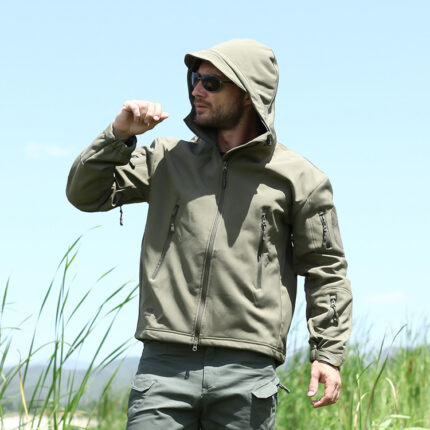
Hardshell jackets are a useful example because the buyer must evaluate both commercial appeal and technical performance. Ask for:
- A waterproof rating and the test method behind it, such as ISO 811.
- Breathability information and the test conditions used to support it.
- Seam-sealing details, laminated or coated construction, zipper protection and hood adjustment.
- Fabric composition, weight and durability expectations.
- Available colours, sizes, size ratios, MOQ and quantity tiers.
- Packing format, carton quantity and carton dimensions.
These details help a distributor compare suppliers fairly and help a retailer explain the product to the end customer. Our hardshell jacket category is set up for B2B enquiries, with bulk pricing, packing and availability confirmed by quote. Buyers who want to model landed cost against another category can also review the cargo and work pants range.
How to build a better 2026 assortment
A resilient wholesale assortment usually blends three roles:
- Traffic products with strong opening price points.
- Margin products with a clear performance or design advantage.
- Repeat products that can be reordered or expanded as sell-through proves demand.
Closeout apparel can perform well in the first category, but it should not be the entire programme. Buyers need visibility on replenishment, total landed cost and customer support. Suppliers that provide accurate specifications, clear packing data and responsive communication reduce the cost of managing the order.
Frequently asked questions
Is overstock apparel lower quality?
Not necessarily. Overstock can be first-quality stock from cancelled orders, excess seasonal production or assortment changes. The condition and origin should be confirmed for each lot.
What MOQ should a wholesale buyer expect?
MOQ depends on category, stock status, colour and whether the item is in-stock or made to order. It should be stated in the quotation rather than assumed from a general website range.
Should buyers choose FOB or DDP?
Neither term is automatically cheaper. FOB gives the buyer more control over freight but requires more logistics work. DDP can simplify delivery but the quote should show what is included and how duty and tax risk are handled.
What documents should be requested before dispatch?
Ask for the final packing list, size and colour breakdown, carton data, inspection record, product specification and any test reports relevant to the product claim.
Request a bulk quote
If you are sourcing closeout or overstock apparel for wholesale, distribution or resale, tell us the category, target quantity, destination country or port and any required sizes or colours. We will confirm availability, MOQ, pricing, packing and lead time in writing. Request a bulk quote or contact SourceClothe to discuss your 2026 apparel programme.
Sources
- McKinsey and The Business of Fashion, State of Fashion 2026.
- Deloitte, 2026 Retail Industry Global Outlook.
- International Organization for Standardization, ISO 811:2018.